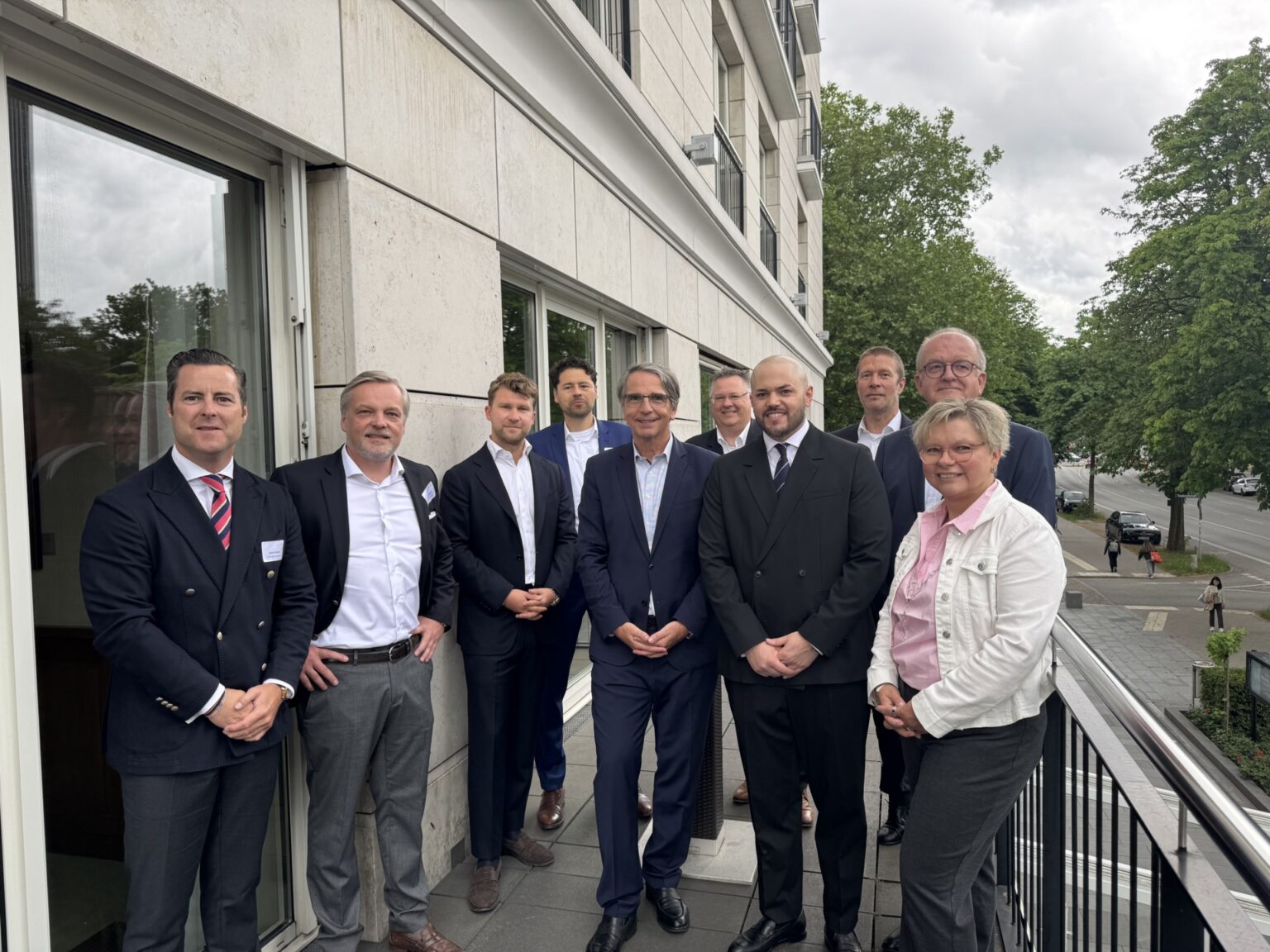

Hamburg, November 27, 2025 – Around 1,000 representatives of the industry gathered this year for the traditional Grofor Dinner – the gala evening of the Association of Wholesalers for Oils, Fats and Oil Raw Materials – in Hamburg. Grofor President Björn Meyer drew a mixed but overall positive conclusion for the year coming to an end.
“Germany’s nearly stagnant economic growth of just 0.2 percent is not an encouraging signal. Uncertainty is the new normal,” said Meyer. “Yet once again, our companies have proven to be remarkably resilient. The figures show that the supply of vegetable oils and fats in Germany and Europe remains stable. This is not something to be taken for granted, but the result of a functioning value chain—from origin through trade to processing.”
Looking at politics, Meyer emphasized that the expectations of the industry remain high—both at the national and European levels. “The initial sense of optimism following the federal election has unfortunately faded somewhat,” Meyer said. He views it positively that Chancellor Merz is strengthening Germany’s role in the international context again, but warned: “Domestic tasks must also be addressed. In some areas, the coalition agreement was drafted in great haste—and that is now taking its toll.” The association is also observing increasing tensions within the EU. “Parliament is drifting apart, and the Commission sometimes seems far removed from the everyday reality of companies,” Meyer said. “This alienation encourages political disillusionment. It is high time to rebuild trust—through transparent, pragmatic decisions and policies that seek to balance different interests.”
As a counterbalance to protectionism and erratic tariff policies, Meyer pointed to international trade itself: “Trade connects – trade agreements are an effective strategy against isolation. We explicitly welcome the initiative of the BMLEH to strengthen agricultural exports. Prosperity does not arise from isolation, but from cooperative partnerships.” A recurring issue remains the EU Regulation on Deforestation-Free Products (EUDR). “One might almost say: every year at the Grofor Dinner, it’s like Groundhog Day – and implementation is postponed once again,” Meyer remarked with a smile. “But simply extending deadlines is not enough. We need substantive improvements. The industry fully supports the objectives of the EUDR, but implementation must remain practical, legally certain, and proportionate.”
Meyer also welcomed progress in the area of food safety, while warning against excessive regulation: “Tighter rules are appropriate where risks or new scientific findings require them. But we must not forget: the dose makes the poison. Overly ambitious limits must not lead to valuable food being destroyed.” In closing, Meyer looked optimistically toward the future: “Our industry has repeatedly proven in recent years that it is adaptable and capable of meeting future challenges.”
“We should preserve this strength—with reliability in politics, a sense of proportion in regulation, and the courage to cooperate across borders.”
German Association of the Wholesale Trade in Oils, Fats and Oil Raw Materials (Grofor)
Grofor was founded in Hamburg in 1916 by 25 entrepreneurs involved in the trade of edible lard and fats, fish oil, technical fats for the soap and candle industry, as well as vegetable oils. Grofor represents agricultural trading companies across Germany that trade in fats, oils, and oil raw materials. Through their activities, these companies stand for progress in the industry, free international trade, and open dialogue with third countries.