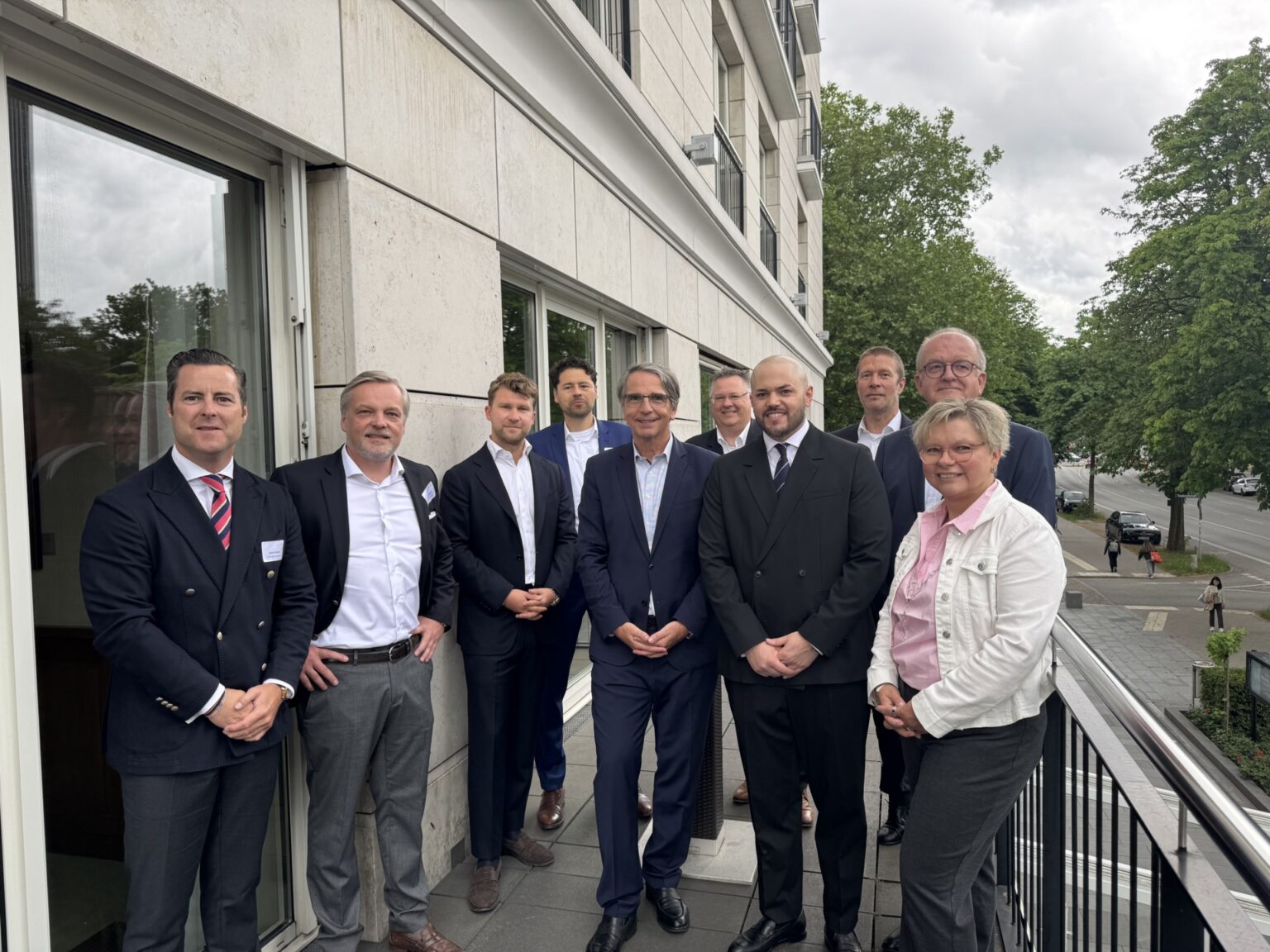

Economist and agricultural economist Stephanie Kröger has been with Der Agrarhandel for ten years, currently serving as Advisor for Foreign Trade and the International Market. At the German Association of the Wholesale Trade in Oils, Fats and Oil Raw Materials, she serves as Managing Director.
For the time being, promising sales opportunities in India will remain out of reach for the European agricultural and food sector – despite the new trade agreement. In the long term, population growth, urbanization, and an expanding middle class in the partner country are likely to significantly increase demand for the products currently excluded, writes Stephanie Kröger, Foreign Trade Advisor at the association Der Agrarhandel. She calls for a gradual expansion of trade conditions.
by Stephanie Kröger, Federal Association of Agricultural Trade and the Association of Grain Traders of the Hamburg Exchange e.V.
From the perspective of the agricultural trade sector, the EU–India free trade agreement is an ambivalent but strategically sound arrangement: it is geopolitically understandable and an important first step that strengthens Europe’s position. At the same time, however, the agreement still contains a clear substantive gap in terms of trade policy. It is certainly not a final state, but must be the starting point for further negotiations.
An EU–India free trade zone would indeed create the largest in the world, significantly larger than Mercosur, for example. This would strengthen Europe’s multipolar position, as dependencies on China and Russia would be reduced. For the German agricultural trade sector, this would indirectly support more stable investments, logistics, and framework conditions, ultimately strengthening agricultural value chains.
“Parking” at the Expense of High-Quality Processed Products and Specialty Feed
At the same time, the deliberate exclusion of sensitive agricultural sectors such as dairy, sugar, or parts of the livestock sector was certainly the unavoidable price for reaching an agreement: in India, millions of small farmers are protecting their livelihoods, while in the EU many current conflicts revolve around agricultural policy. This pragmatic “parking” makes a deal possible that would otherwise have failed.
From a purely economic perspective, European and German agriculture will initially miss out on market access for specific products such as high-quality processed goods, specialty feed, or niche offerings that would have potential in the growing Indian market.
However, a fully liberalized agricultural trade with India would have been highly conflict-prone in the short term: massive differences in prices and standards, different subsidy regimes, and extremely heterogeneous production structures would have created enormous adjustment burdens and challenges in supply chains on both sides.
Growth Partner in the Long Term
For the German agricultural trade sector, India is not an immediate volume market like the EU-27, the Mediterranean region, or Mercosur, but rather a medium- to long-term growth partner in selected segments. An opportunity is therefore not permanently lost, but merely postponed.
Is agriculture therefore missing an opportunity? Yes, partly – is the trade therefore unattractive? No, but in our view it is currently too complex for a rapid opening. From the perspective of our association, Der Agrarhandel, the advantages of the agreement are threefold:
Improved Framework Conditions: Even without agriculture, it opens doors in logistics, services, certifications, digital trade, and investments. These are all factors that facilitate the planning of complex supply chains with India.
Regulatory Coherence: Common standards on sustainability, customs and rules of origin, as well as SPS requirements create greater predictability, which is essential for trade.
Options for the Future: A politically viable framework agreement can more easily be expanded with agricultural chapters or gradually opened for specific products than starting from scratch after a failed “all-or-nothing” attempt.
The key point remains: the EU is integrating India more closely into a diversified trade architecture, alongside Mercosur, North America, and ASEAN.
Opportunity for Food Products, Feed, and Specialty Raw Materials
Looking at the overall framework conditions, it should not be forgotten that India is not an “easy” export market. High tariffs, complex SPS rules, and strong protection of the domestic agricultural sector remain in place and make rapid volume flows unlikely.
In the medium to long term, however, its relevance will grow significantly due to population growth, urbanization, an expanding middle class, and increasing demand for processed foods, feed, and specialty raw materials, both as a sales and sourcing market.
In this area in particular, we believe that German agricultural trade can stand out with quality, reliability, and sustainability standards once regulatory barriers decrease. We therefore welcome the agreement as a geopolitical building block and a pragmatic step forward – it is certainly better than no deal at all.
However, a clear outlook is essential: a gradual expansion toward fair, predictable, and sustainable agricultural trade conditions with India. This agreement must not be the end point, but should serve as a springboard for a genuine free trade zone.
Stephanie Kröger is an economist and agricultural economist and has been working for Der Agrarhandel for ten years, currently as Advisor for Foreign Trade and International Markets. She also serves as Managing Director of the German Association of the Wholesale Trade in Oils, Fats and Oil Raw Materials (Grofor).